
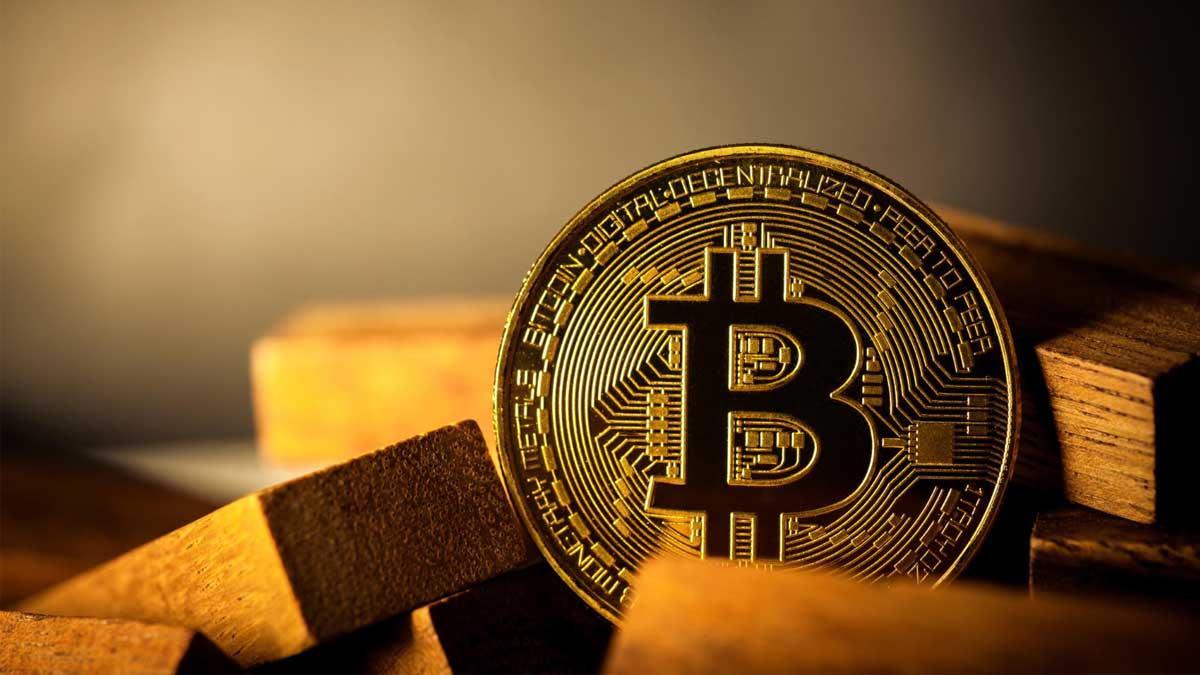
For centuries, gold has been the ultimate store of value. Empires hoarded it, central banks backed currencies with it, and investors turned to it during times of economic uncertainty. Its scarcity, durability, and universal acceptance have made it the standard for wealth preservation. Today, Bitcoin is emerging as a digital alternative to gold, offering many of the same properties, with additional benefits unique to the digital age.
Bitcoin, sometimes called “digital gold,” is not merely a speculative asset. It embodies scarcity, decentralization, and transparency, making it an increasingly attractive choice for investors seeking protection against inflation, currency devaluation, and financial instability. Understanding why Bitcoin is considered digital gold, how it compares to traditional gold, and what this means for long-term wealth preservation is crucial for anyone navigating the evolving financial landscape.
The Scarcity Factor
Gold’s value historically stems from its scarcity. There is a finite amount of gold on Earth, and extracting it requires significant effort and cost. Similarly, Bitcoin has a hard cap of 21 million coins, a limit enforced by its protocol. No government, central bank, or individual can increase this supply, ensuring that scarcity is guaranteed.
Bitcoin also implements a predictable issuance schedule. New coins are minted through mining, and the reward halves approximately every four years in an event called the halving. This deflationary mechanism gradually reduces the rate at which new Bitcoin enters circulation, enhancing scarcity over time.
Scarcity alone, however, is not enough to create value. Adoption, trust, and market perception also play critical roles. As Bitcoin’s network grows and its utility becomes more recognized, scarcity becomes increasingly meaningful, much like gold’s value is reinforced by centuries of trust and recognition.
Durability and Portability
Gold is durable—it does not corrode or decay—but it is physically cumbersome to store and transport. Large quantities require secure vaults and insurance, which limits accessibility. Bitcoin, being entirely digital, offers superior portability. With the proper security measures, an individual can control millions of dollars in Bitcoin using a single hardware wallet or secure private key.
Bitcoin’s digital nature also enables global transactions in minutes, without reliance on banks or intermediaries. While gold requires logistics for movement and verification, Bitcoin transactions can be executed securely and verifiably across borders with minimal friction. This property is particularly valuable in a globalized economy, where wealth mobility and liquidity are essential.
Transparency and Verifiability
Gold’s supply is opaque. While central banks and mining companies provide estimates, the total stock and historical movements are difficult to audit independently. Bitcoin, in contrast, operates on a transparent, public ledger—the blockchain. Every transaction, every coin minted, and every wallet balance can be verified by anyone at any time.
This transparency is a fundamental differentiator. Investors can trust the system without relying on third parties or intermediaries. While gold requires external validation and physical inspection, Bitcoin’s protocol guarantees that supply and ownership are verifiable, tamper-proof, and immutable.

Inflation Hedge and Macro Implications
Gold has long been used as a hedge against inflation, protecting wealth when fiat currencies lose purchasing power. Bitcoin performs a similar role, particularly in economies facing monetary expansion or currency debasement.
Historical events illustrate this principle:
- During periods of aggressive monetary stimulus, such as the COVID-19 pandemic, investors sought assets outside traditional fiat, driving Bitcoin to new all-time highs.
- In countries experiencing hyperinflation, such as Venezuela, citizens increasingly turned to Bitcoin to preserve wealth and conduct transactions internationally.
Bitcoin’s deflationary design, combined with a growing adoption network, positions it as a hedge not just against inflation but also against systemic risks in traditional financial systems.
Comparisons Between Gold and Bitcoin
| Feature | Gold | Bitcoin |
|---|---|---|
| Scarcity | Finite, physical | Finite, digital (21M cap) |
| Portability | Low, requires transport & security | High, digital & transferable globally |
| Verification | Requires expertise & trust | Fully auditable on blockchain |
| Divisibility | Limited, physical constraints | High, divisible to 0.00000001 BTC |
| Inflation Hedge | Yes, historically | Yes, built-in deflationary supply |
| Accessibility | Difficult, requires intermediaries | Easy, global access via wallets |
These comparisons highlight why Bitcoin is increasingly referred to as digital gold. While gold remains a reliable store of value, Bitcoin’s digital characteristics address many limitations of physical assets, particularly for global investors seeking portability, divisibility, and transparency.
Adoption Trends
Bitcoin’s adoption is accelerating across retail, corporate, and institutional sectors:
- Retail Adoption: Apps, exchanges, and wallets make Bitcoin accessible to individuals worldwide. Users can buy, sell, and store Bitcoin with relative ease.
- Corporate Adoption: Companies like MicroStrategy, Tesla, and Block (formerly Square) have added Bitcoin to their balance sheets as a treasury reserve.
- Institutional Adoption: Hedge funds, family offices, and investment firms increasingly allocate portions of portfolios to Bitcoin, driven by scarcity, macroeconomic risks, and diversification benefits.
This adoption reinforces Bitcoin’s credibility as a store of value. Unlike early speculative periods, current investors view it as a long-term asset with strategic importance, akin to gold in traditional portfolios.
Risks and Considerations
Despite its promise, Bitcoin carries risks that investors must manage:
- Volatility: Bitcoin’s price can fluctuate significantly in short periods, which may challenge investor psychology.
- Regulatory Uncertainty: Government policies, taxation, and compliance requirements vary globally.
- Security Risks: Self-custody requires diligence; lost keys mean lost wealth permanently.
- Market Maturity: While adoption is growing, Bitcoin is still a relatively young asset compared to centuries-old gold markets.
Effective risk management, including self-custody, diversified investment strategies, and long-term planning, mitigates many of these concerns.
Conclusion
Bitcoin has emerged as a digital complement—and in some ways an evolution—of gold as a store of value. Its scarcity, transparency, portability, and divisibility make it uniquely suited for the digital age, while its adoption as a macro asset continues to grow across retail, corporate, and institutional investors.
For long-term investors, Bitcoin offers:
- Protection against fiat inflation
- Diversification from traditional assets
- Sovereign control over wealth
- Verifiable scarcity and trustless ownership
While gold will likely remain relevant, Bitcoin’s advantages in accessibility, digital transfer, and verification position it as a modern alternative for wealth preservation in the 21st century. Understanding this paradigm is essential for anyone looking to protect and grow their wealth in an increasingly digital and inflationary global economy.